
Giraffe Manor, Nairobi
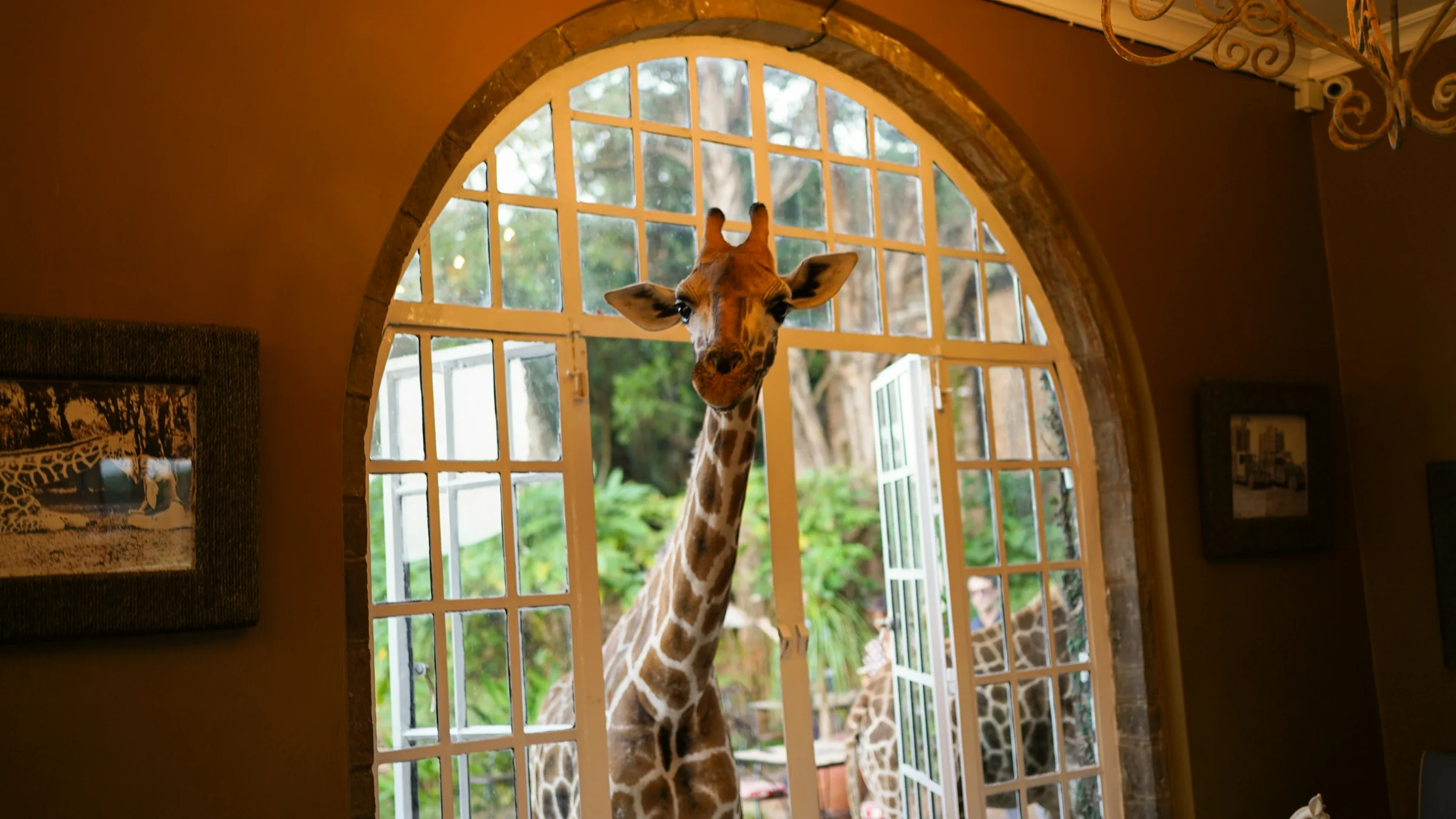
Giraffe Manor is a 1930s ivy-covered manor in the Lang'ata suburb of Nairobi where a resident herd of endangered Rothschild's giraffes regularly leans through the dining-room windows at breakfast — and again at tea — to be hand-fed pellets by guests. There are twelve rooms, two daily giraffe windows, and one of the most photographed breakfast tables in the world.
Why it earns a slower itinerary, not a quick stop
The reflex with Giraffe Manor is to fly in for one night, get the photo, and bolt for the Maasai Mara. We'd argue the opposite. The point of staying here isn't the giraffe at the window — that's a postcard. The point is the morning after the postcard, when you've already seen the trick and you're free to actually look. To notice that Daisy hangs back. That Edd, the youngest, will eat from your hand but only if you stand still for ten seconds first. That the staff who run this place know each animal's temperament the way a sommelier knows a vintage.
Booking two nights instead of one transforms the visit. The first morning you're a tourist; the second you're a guest. That shift is the whole argument for slow travel, and it applies as cleanly to a 12-room manor as it does to a Tuscan village.
What to actually do, beyond the giraffes
Pair Giraffe Manor with the adjacent African Fund for Endangered Wildlife sanctuary on-property — included with the stay, and the conservation backstory that makes the whole experience defensible rather than performative. The Rothschild's subspecies fell to fewer than 700 individuals in the wild; the breeding program at Giraffe Manor and its sister sanctuary has been one of the rare success stories.
Within a 30-minute drive: the David Sheldrick Wildlife Trust elephant orphanage (open one hour daily, 11am–noon — book months ahead), the Karen Blixen Museum (the actual Out of Africa farmhouse), and the Kazuri bead workshop where 300 single mothers hand-paint ceramic jewelry on wages above local average. None of these are filler; each is one of the better hours you can spend in Nairobi.
How a Trepic creator would frame this stop
Giraffe Manor is a textbook example of the kind of place we built Trepic for. It's not a chain. It can't be discovered on a metasearch site by sorting hotels by price-per-night. It's the kind of stay that needs a story to be understood — why two nights instead of one, what the conservation program actually does, which of the twelve rooms gets the morning sun. That's exactly what our creators write.
When a Trepic creator publishes a dispatch from Giraffe Manor on Trepic Stories, the booking link inside that story routes through the property directly. Readers who book pay the same rate as anyone else; the creator earns up to 20% commission on the stay. The hotel gets a guest who arrived already understanding the place. Everyone wins, and nobody had to pretend a sponsored Instagram reel was journalism.
When to go, and what to spend
Best months are June–October (cool dry season) and January–February (short dry, before the long rains). Rates start in the high-three-figures USD per night, all-inclusive of meals and the giraffe sanctuary visit; the Karen Blixen Suite — the largest, with a private terrace — sits at the top of the rate card and is worth it if you can. Book six to nine months out for high season. The hotel does not offer day visits; you must be a registered guest to attend breakfast.
Pair this with three to five nights at a Mara conservancy (Saruni, Angama, Mara Plains) for a full Kenya arc — Nairobi gives you the cultural and conservation grounding, the Mara gives you the wild. Consider browsing dispatches from other Trepic travelers for the connective tissue — the bush flight logistics, what to pack, how to talk to your guide.
Plan a stay worth telling
Trepic connects mindful travelers with creator-curated stays at properties like Giraffe Manor — and pays the writers who make them legible.
Join the Waitlist