
The complete guide to slow travel in 2026
Slow travel is the practice of staying longer in fewer places, traveling overland when you can, and matching the rhythm of where you are instead of imposing the rhythm of where you came from. It descends directly from the Slow Food movement Carlo Petrini founded outside a McDonald's near the Spanish Steps in 1986 — and in 2026 it is no longer countercultural. The cost of jet fuel, the saturation of every famous city, and the quiet exhaustion of a generation raised on itinerary apps have made it the dominant ethic of how thoughtful people now travel.
What slow travel is, in one sentence
Slow travel is choosing depth over breadth — fewer destinations, longer stays, ground transport where possible, and meals at the pace the place sets. It is a schedule decision before it is anything else. You can be a slow traveler in Manhattan if you stay three weeks and eat at the same coffee counter every morning, and you can be the opposite of one in Bhutan if you helicopter through it in 48 hours.
If that sounds austere, it is not meant to. Slow travel is not about deprivation. It is about returning the variable that mass tourism removed from the equation: time. When you give a place enough of it, the place starts to behave differently toward you.
Where the term comes from
The phrase "slow travel" entered general usage in the early 2000s, but the practice is the natural extension of a much older protest. In 1986, the Italian food writer Carlo Petrini led a demonstration against the opening of a McDonald's at the foot of the Spanish Steps in Rome. The protest was small. The framework it produced — Slow Food, then the broader Slow Movement — was not. Within a decade, the same ethic had spread to architecture (Slow Cities, the cittaslow charter), to journalism (the slow news movement), to fashion, and finally to travel.
The travel application is the most literal of the lineages. If fast food meant industrial calories optimized for throughput, slow food meant ingredients chosen for place and season. If fast travel meant ten cities in fourteen days optimized for square photos, slow travel meant one valley over two weeks optimized for nothing in particular. The glossary entry traces this lineage in 60 words.
Slow travel vs. mindful travel — they are not the same thing
The two terms get used interchangeably and they should not be. Mindful travel is about the quality of attention you bring. Slow travel is about the schedule that makes that attention possible. You can be slow without being mindful — many retirees on long-stay cruises are very slow and very distracted. You can be mindful without being slow, but it is harder. The mind defaults to the rhythm of the body, and the body's rhythm is set by your itinerary.
Think of it this way: slow travel is a structural decision (how many days, how many places, how you get there). Mindful travel is a behavioral one (what you do once you arrive). Slow makes mindful achievable. Mindful makes slow worth the time.
| Term | Domain | Decision point |
|---|---|---|
| Slow travel | Schedule, geography, transit | Before you book |
| Mindful travel | Attention, presence, behavior | While you are there |
| Sustainable travel | Environmental footprint | How you choose carriers and stays |
| Regenerative travel | Net-positive impact on place | Where the money goes |
The seven principles of slow travel
1. One place, longer. The mathematical floor of slow travel is a five-night stay. Anything shorter is a transit log. Five nights is when day three exists, and day three is the day a place stops behaving like a tourist destination and starts behaving like a place.
2. Take the train when you can. Overland transit changes the geometry of a trip. You watch the landscape transition. You cross the border in your seat instead of teleporting through a security line. Europe is built for this. Japan is built for this. The American West, surprisingly, is built for this if you can stomach the schedule.
3. Match the local rhythm. If lunch is two hours in this place, it is two hours. If shops close from 1pm to 4pm, you do not run errands at 2:30. Riposo, siesta, the 5am call to prayer — the rhythms are not obstacles to your itinerary, they are the itinerary.
4. Eat in season, eat local, eat slowly. The fastest path to actually being somewhere is to spend two hours over one meal cooked with what is in season this week. The check arrives when you ask for it; never before.
5. Half the itinerary is unbooked. Reserve your two anchor experiences — a tasting menu, a market morning, a guided walk. Leave the rest open. Day three suggests its own plans if you let it.
6. Stay where the local economy lives. Family-run inns, riads, ryokans, agriturismo. The boutique hotel is a slow-travel native; the chain hotel is its opposite. The math is also better — staying with operators who own the building means more of your money lands locally.
7. The unhurried departure. Do not book the early flight. The way you leave shapes what you carry home. One slow last morning, one final coffee at the place you have now been to seven times, one last walk down the same street.
What changed in 2025–2026
Three things made slow travel mainstream in the last 18 months. First, jet fuel: airline ticket prices on intra-Europe routes rose roughly 30% from their 2019 baseline, finally tipping rail into pure cost parity for many corridors. Second, overtourism legislation — Venice's day-tripper fee, Amsterdam's hotel cap, Barcelona's apartment-rental phase-out — pushed both supply and norms toward longer stays. Third, the maturation of remote work made multi-week trips practically possible for a much larger share of office workers than the pre-pandemic baseline.
The cumulative effect is that slow travel in 2026 is not a niche choice. It is the path of least resistance for anyone who can think two weeks ahead.

Fifteen places to practice slow travel in 2026
The list below is filtered for places that reward time spent — where day three is meaningfully better than day one, and day seven is meaningfully better than day three. Stay length is the recommended minimum, not the maximum.
| Place | Min stay | Why it rewards slowness |
|---|---|---|
| Setouchi, Japan | 7 nights | The inland sea is geographically hostile to fast travel — ferries set the schedule, and Tadao Ando's architecture rewards being there in different light. The Aonagi dispatch is the long version. |
| Kanazawa, Japan | 4 nights | Kyoto with the volume turned down. Kenroku-en garden is a different garden at 7am than at 2pm; you need both visits to understand it. |
| Patagonia, Chile | 7 nights | The horizon is the entire point. Stargazing is not an activity, it is a multi-night discipline. Most travelers leave before they have actually seen the sky. |
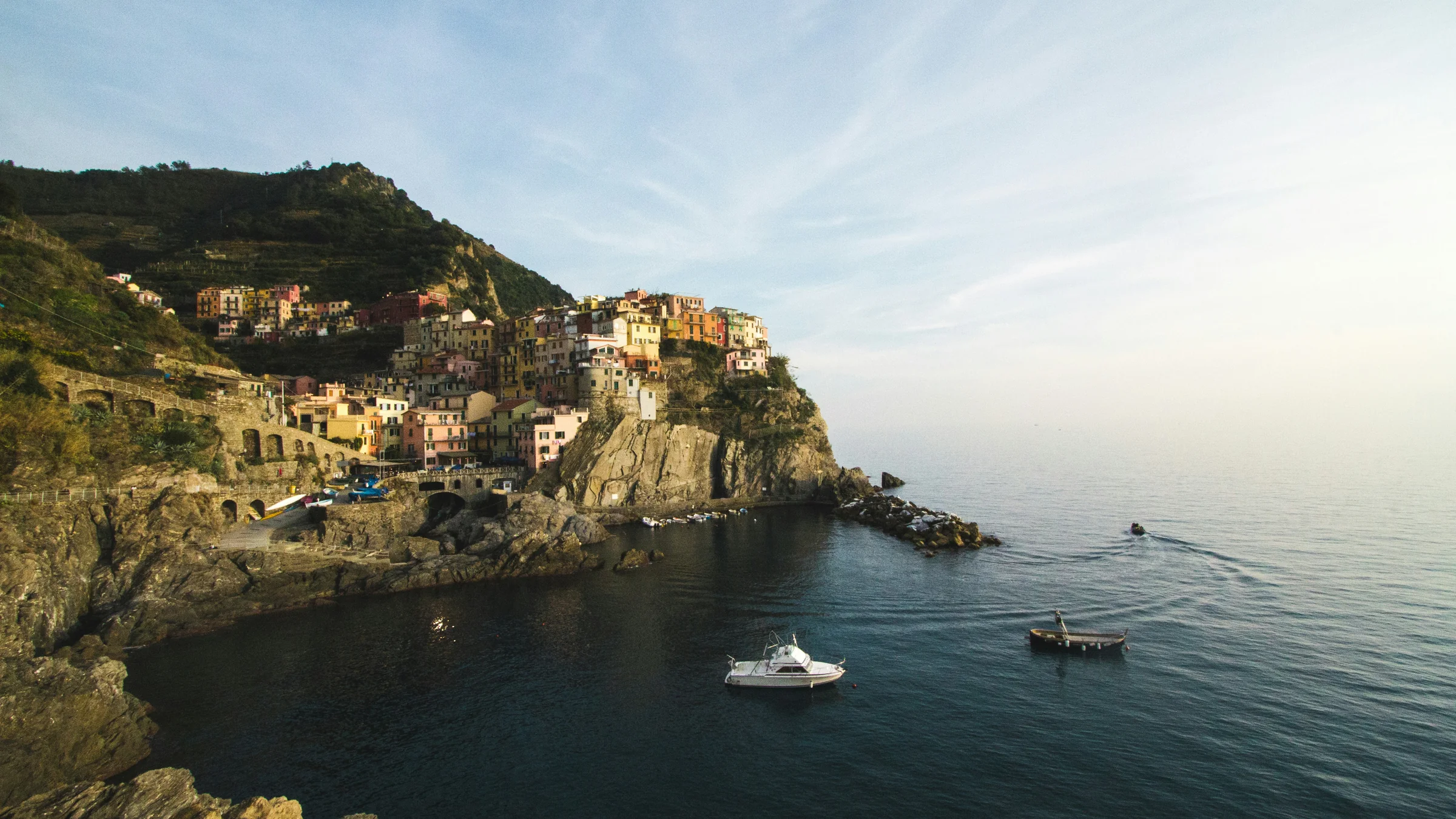
| Amalfi Coast (off Positano) | 7 nights | Stay in Praiano or Ravello, day-trip to Positano. The lemon coast unhurries itself the moment you stop trying to do all of it. |
| Marrakech, Morocco | 5 nights | Riad living is the architecture of slowness — the medina is loud, the courtyard is composed, you learn to oscillate between them. |
| Lofoten, Norway | 5 nights | Light, weather, and the rorbu (fisherman's hut) ethics. Driving the islands too fast misses the entire point of the islands. |
| Istria, Croatia | 7 nights | Truffle country, Mediterranean before the rediscovery, and a slow-food scene that operates at Italian-level seriousness with half the prices. |
| Big Sur, California | 4 nights | Cell service is genuinely thin. Highway 1 is the meditation. The fog moves on its own clock. |
| Galápagos, Ecuador | 7 nights | Wildlife forces presence. You cannot multitask an iguana, and the boat-based itineraries set a deliberately gentle pace. |
| Bhutan | 10 nights | The $200/night Sustainable Development Fee enforces slowness at the policy level. The country is, in a sense, the only place that has legislated this guide into existence. |
| Madeira, Portugal | 7 nights | Mountain fog, sea cliffs, and the levada walks — long irrigation channels that double as some of the best easy hiking in Europe. |
| Hokkaido, Japan | 7 nights | The opposite of Tokyo. Long drives, onsen towns, and the slow agricultural geometry of the Furano Plain. |
| Andalusia, Spain | 10 nights | Granada, Córdoba, Seville on rail. Late dinners, the architecture of layered occupation, and the only place where a 4pm appointment means 4pm-ish. |
| Mendoza, Argentina | 5 nights | Wine country at a pace that wine country deserves. The Andes set the eastern light. |
| Faroe Islands | 5 nights | Weather windows decide your itinerary. You wait. The islands reward patience the way few places do. |
Slow travel on a normal budget
The most common objection to slow travel is that it sounds expensive. It can be. It also does not have to be — and the math sometimes works in the opposite direction once you account for the full cost of fast travel.
Long stays unlock weekly rates. Most boutique hotels and nearly all apartment rentals have a 30–40% drop in nightly rate at seven nights. Two weeks in one apartment in Lisbon is often cheaper than four nights in three different cities of the same trip.
You stop buying meals out three times a day. A kitchen, a market, and a week is a different food budget than three restaurants daily across seven cities. The slow-traveler grocery run is, unaccountably, one of the best parts of the practice.
Transit costs collapse. Each leg of a trip — flight, transfer, train — has fixed friction (luggage handling, taxi, jet-lag recovery time you bought with a hotel night). Removing legs removes those costs in stacks.
Shoulder season works. Slow travel is structurally compatible with off-peak: when you are staying ten nights, two of them being rainy is fine; when you are staying two nights, two rainy ones is the trip.
Common myths about slow travel
Myth: it is for retired people. The fastest-growing slow-travel demographic is remote-working knowledge workers in their 30s using accumulated PTO plus a week of remote work to construct two-week trips. Slow travel is now particularly compatible with the way work itself has slowed and stretched.
Myth: you have to give up bucket-list places. You do not. You give up doing all of them in one trip. The Galápagos can be a honeymoon. Bhutan can be a sabbatical. Patagonia can be a winter window. Stacking them into a thirty-day round-the-world is the part you skip.
Myth: it requires a high budget. See above. Slow travel is, at the per-day level, often cheaper than the trip it replaces. The barrier is calendar, not money.
Myth: it is boring. The reverse: most travelers report the texture of memory is denser, not thinner. You remember more, with more specificity, from the slow week than from the seven-city sprint. Most people simply have not had the chance to verify this.
How to plan a slow trip in four steps
Step 1: Pick one anchor. Not a country — a region, a valley, a neighborhood. The Amalfi Coast, not "Italy." Setouchi, not "Japan." Kanazawa, not "Japan again." Let everything else flow from there.
Step 2: Set a calendar floor. Five nights minimum, seven if you can, ten if the place is structurally remote (Patagonia, Bhutan, Faroe). Anything shorter and you are visiting, not traveling.
Step 3: Pick the stay before the activities. A boutique hotel or apartment that you actively want to be inside is a structural piece of slow travel — because you will be inside it. The chain hotel chosen for points is the fast-travel artifact you are trying to leave behind. For curated, story-first hotel picks, our partner hotels — including Giraffe Manor in Nairobi and the boutique cohort on Trepic for Travelers — are starting points.
Step 4: Read someone who has actually been. Skim the listicles, then find one essay by someone who stayed long enough to have an opinion. Editorial dispatches on Trepic Stories are written explicitly for this kind of pre-trip reading — by creators paid to tell the truth, not chase impressions.
How Trepic fits in
Trepic is the creator economy meeting travel — AI-powered journaling that turns your itinerary into a story, and your story into a revenue stream. The platform pairs creator-written editorial dispatches — long-form, story-first writing about real places — with bookable hotel partners that earn their inclusion. Travelers read the story, book the stays inside it.
Slow travel is the schedule under which Trepic dispatches make sense to read. The 800-word dispatch is too long for the seven-cities-in-fourteen-days traveler; that traveler is on TikTok scrolling for the photogenic angle. The slow traveler, by contrast, is the natural reader — they have time before the trip, time during, and a reason to want one careful voice over twelve frantic ones.
If you are a slow traveler, the entry point is Trepic for Travelers or the dispatches at Trepic Stories. If you are a creator who writes the kind of long-form essay this audience reads — and would rather earn up to 20% on bookings than $50 from an Instagram brand deal — see How to Monetize Travel Content in 2026.
The one-line version
Pick one place. Stay longer. Take the train. Eat slowly. Leave the second half of the itinerary blank. The trip will surprise you, which is what trips were supposed to do before we optimized that out of them.
Travel once, remember forever
Trepic's founding cohort is open to slow travelers, mindful creators, and boutique hotels. Reserve your place.
Join the Waitlist